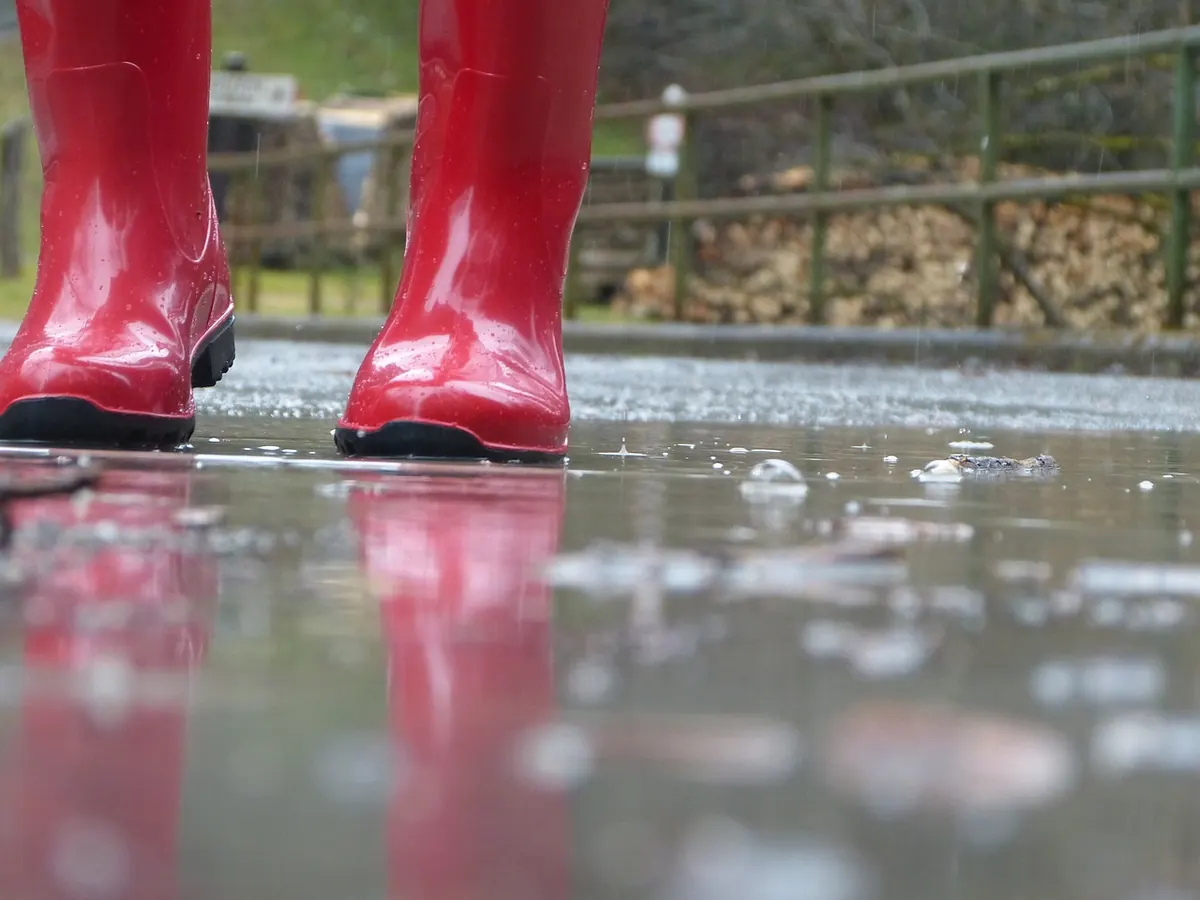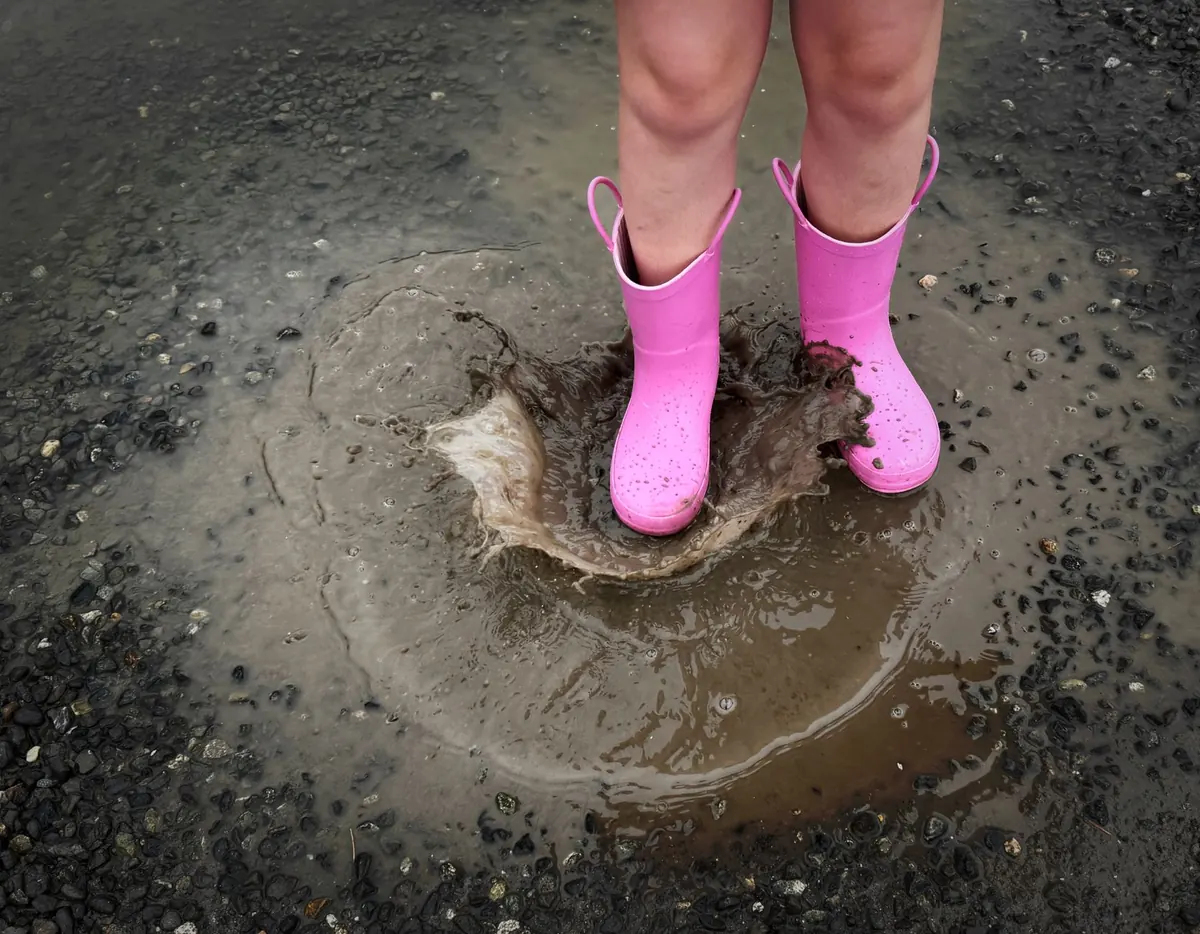
A festival forecast is a rough guide at best. You pack for sunshine, arrive to drizzle, and spend Saturday afternoon picking your way between puddles that have quietly become ponds. Wellington boots are the one item that decides whether that is a mild inconvenience or the end of your weekend. Get them wrong and you will be limping by Friday night. Get them right and you barely notice the weather. Here is how to sort fit, socks, waterproofing and outfits before you load the car.
Fit first: what to check before you pack them
Most wellies are bought in a rush, usually online, usually in the size you wear in trainers. That works for a dog walk. It does not work for three days of standing, dancing and walking on uneven ground.
Go up half a size if you plan to wear thick socks, but no more. If your heel lifts when you walk, you will have blisters by the first evening. The boot should feel snug around the ankle and roomy in the toe box, with enough space to wiggle your toes without them touching the front.
Look at the sole. A deep, chunky tread grips wet grass and slick mud; a smooth fashion sole slides. Mid-calf height suits most festivals, since it is lighter and cooler than knee-high boots but still tall enough for shallow mud. If you know the site floods, knee-high wins. An adjustable gusset or calf strap helps if you have wider calves, and it stops the boot pulling down as you walk.
The thin foam insole that comes with most pairs flattens within a day. Swap it for a cushioned insole if you can. Then wear the boots around the house for twenty minutes with your festival socks on, ideally on a wet bathroom floor, and see how they feel. Test them at home, not in a field.
Outfits that work with the mud, not against it
Wellies are forgiving. They look deliberate with almost anything short, and they rescue clothes you would not normally wear in the rain.
Combinations that hold up
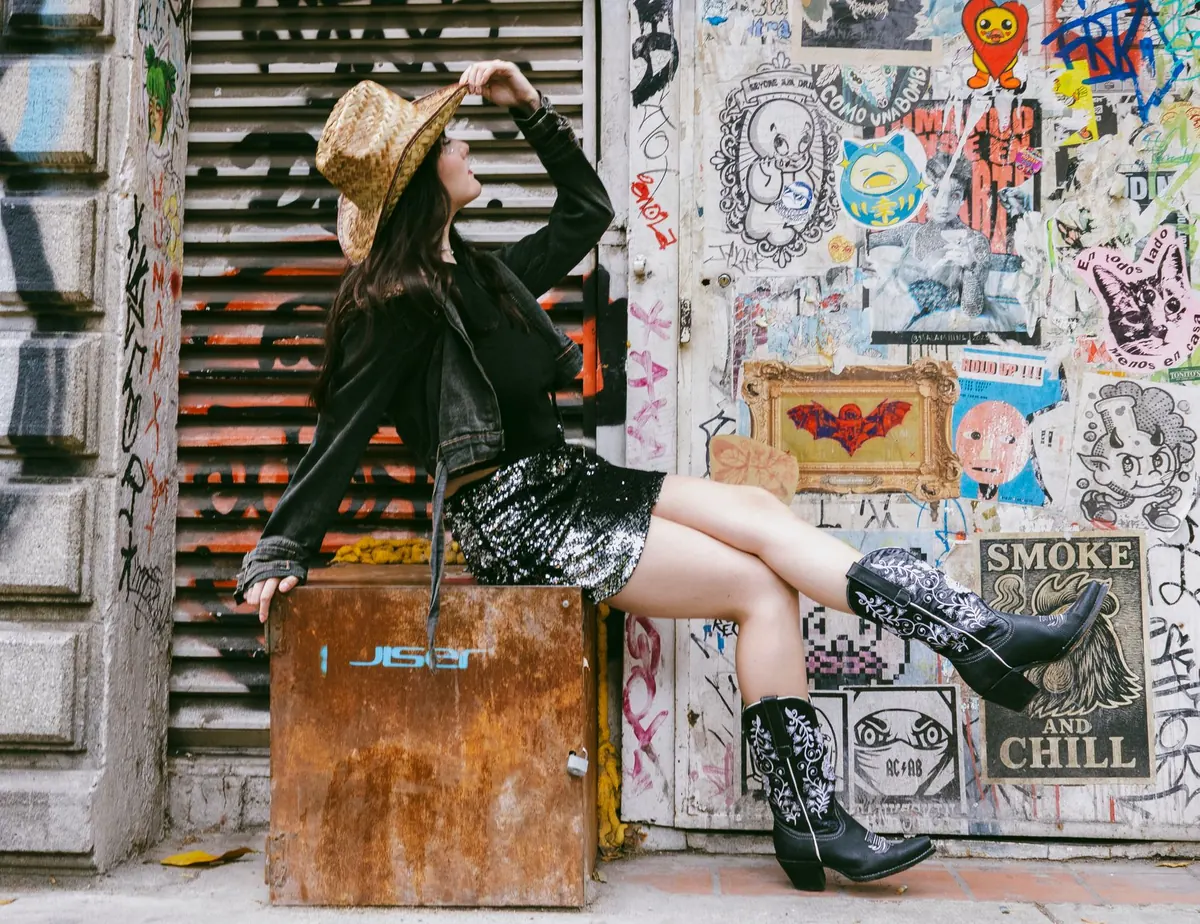
Denim shorts or a short skirt with thick socks folded just over the boot rim is the classic for a reason: it keeps the mud line low and it stays comfortable when you sit down. Tuck leggings and tights into the boots rather than over them, so water runs down the outside instead of soaking upward. A dress that stops above the knee works better than a maxi, which acts like a mop and pulls field water up to your thighs. Add a packable poncho with a hood rather than an umbrella, which you will abandon the moment a crowd forms.
What to avoid
Skip trailing hems, dragging scarves and anything pale that you want to keep pale. Dark rubber hides mud; a bright boot with neutral clothing does the same job from the other direction. And think ahead to the evening: the ground stays wet after dark, so plan on wearing the same pair to the headline set rather than swapping into something you will regret. Bear in mind that wellies offer grip but very little ankle support, so take sloping ground and tree roots slowly.
Socks: the shortest route to comfortable feet
Socks matter more than the boots. Rubber does not breathe, so sweat has nowhere to go, and cotton holds that moisture against your skin. That combination is what turns a small rub into a blister.
Choose wool or a wool-and-synthetic blend, which moves moisture away and stays warm when damp. A thin liner sock under a thicker outer sock adds a layer that rubs against itself instead of your heel. Pack at least three pairs for a weekend: one on, one drying, one spare. Keep one dry pair sealed in a plastic bag at the bottom of your bag, and change socks at least once a day if you can.
Foot powder helps on warm afternoons, and if you already know where you blister, tape those spots before you walk rather than after. Keep any broken skin clean, and if a blister looks infected, or if you have diabetes or circulation problems, speak to a pharmacist or doctor instead of pushing on.
Waterproofing and boot care between days
Rubber boots do not need the waxing routine that leather does, but they do need cleaning. Mud left to dry on the surface stiffens the rubber, wears the flex point near the toe and reduces grip.
Rinse them with cool water and a stiff brush, or wipe them over with a cloth in the porch. Avoid hot water, radiators and campfires entirely; heat warps rubber and shortens its life. To dry the inside, stuff each boot with crumpled newspaper and leave it at tent temperature overnight. The paper soaks up moisture and holds the shape, so replace it in the morning.
Before you travel, bend the toe area of each boot and look for hairline cracks. A dab of rubber adhesive from a hardware or cycle repair kit can get you through a weekend. A coat of silicone spray on the outside makes mud slide off and cleaning much quicker. Store them out of direct sun when you get home.
Security and the practical details nobody mentions
Boots left neatly outside a tent are easy to pick up, and they are not the only thing. Keep your wellies inside the porch in a bag, and keep cash, phone and keys in a zipped pocket or a bumbag worn under your jacket rather than in an outer tent pocket. If the site offers lockers, one shared locker for boots and a bag can be worth it in a washout.
Pack cheap flip-flops for the showers and the walk to the car, and a dry bag for your phone. After dark, mud is harder to read, so carry a small torch. Agree a meeting point and a time with your group before you separate, because phone signal in a crowded field is unreliable at best.
Your muddy-field packing list
- Boots, already tested with the socks you plan to wear
- Three pairs of wool-blend socks, plus one sealed dry pair
- Cushioned insoles, with a spare set if you have them
- A boot bag or two sturdy plastic bags: one for muddy, one for clean
- Flip-flops or old trainers for showers and car parks
- A small stiff brush or cloth, and silicone spray applied before you leave
- Blister plasters and foot powder
- A packable poncho that folds small
- A dry bag for your phone and spare socks
- A small torch or head torch
The night before you go
Spend an hour on this and the weekend takes care of itself. Stand your boots next to the bag with the socks you will actually wear inside them, walk around the house in the pair, then spray them outside and let them dry. Pack the spare socks in their sealed bag, drop the brush and plasters in the top pocket, and put the whole lot by the door. When you arrive to a grey sky and a churned-up field, you will already have solved the only part of the weekend the weather controls.
Photo: Irene Constantino / Pexels